HAARLEM UPWARDS
Do you ever look up? Letting your gaze rise up over rooftops, through tree branches or an alleyway leading your eyes upward, looking up to that which is just out of reach. I’m sure you have and from time to time, those views linger in our memory longer than the very ground we stood on that day. For this story, come with me to Haarlem, my hometown a city built up on medieval stone, a city with beauty on eye level and sky level, as long as you dare to raise your gaze.
CHAPTER 1 | THE EARLY DAYS OF HAARLEM
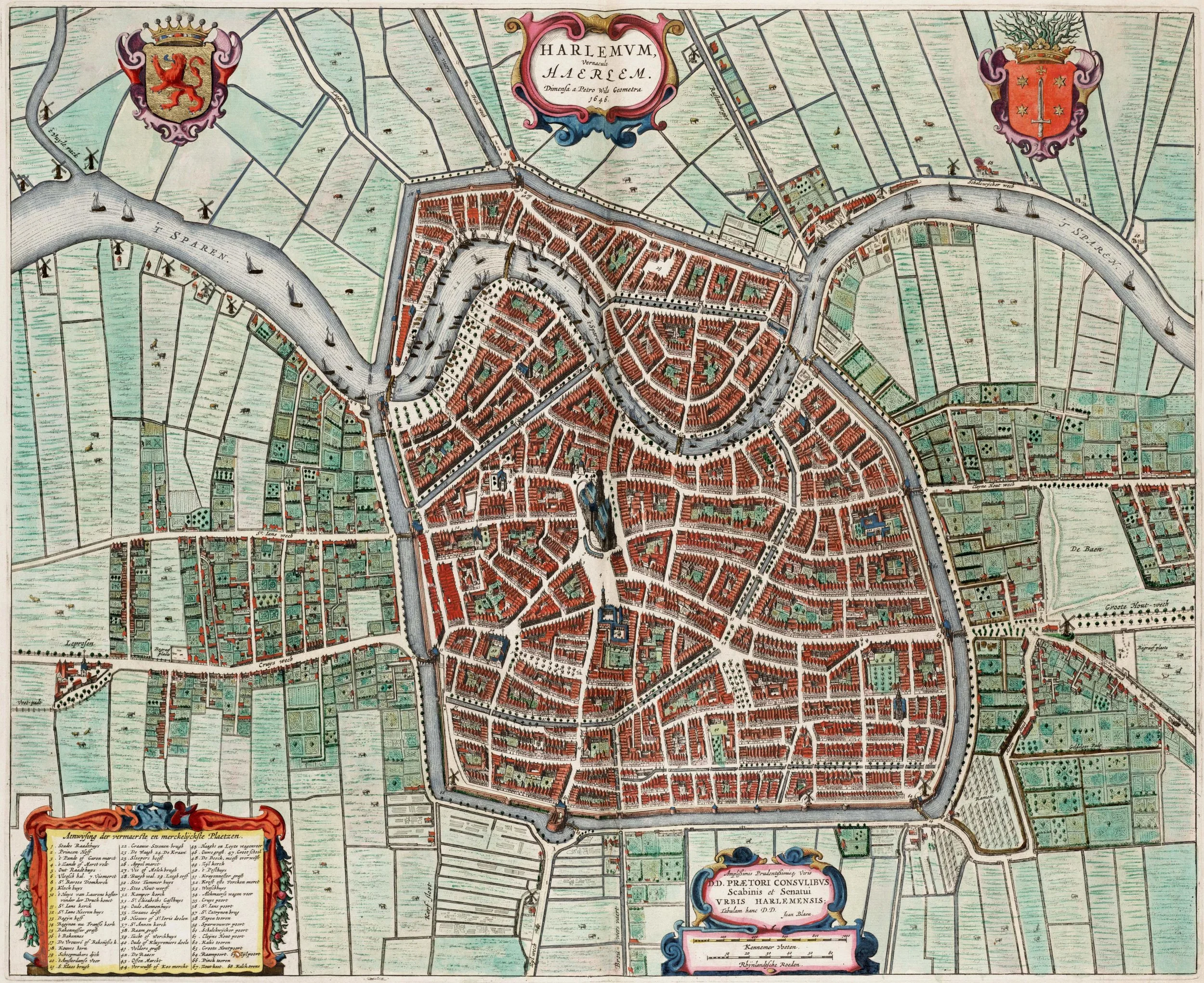
Haarlem in the Atlas van Loon (1646)
We must first return to the earliest days of Haarlem’s growth. Haarlem dates back to medieval times, a period in time in which merchant carts had to hobble over the uneven cobblestone roads on their way to the main square, with boats arriving and leaving through the city’s waterways, in pursuit of what lay beyond the city edges. For travel, or for trade, it’s hard to say.
The proximity to water cemented Haarlem as an important trade city, with its snaking waterways serving as natural gateways for commerce, even today. The Atlas van Loon shows us this, open fields that surround the early city, whilst the Spaarne river branches out into smaller rivers guiding ships on their voyage.
The Atlas also presents us with our first real look at some of the heights on Haarlem’s early skyline. With the most notable ones being: the Church of Saint Bavo located in the heart of the city and the Bakenesserkerk, rising up amongst the clouds along the western edge of the city. But more about them later.
Image source: Haarlem in the Atlas van Loon (1646) via Wikipedia.
Whilst Haarlem wasn’t really known for its size, it did pose its own set of challenges to those unfamiliar. Streets and alleyways formed a web that, once entered, made it easy to lose your sense of direction. Intentionally or unintentionally disorienting, who can say? However when orientation was lost, looking upward would give back direction as long as you raised your gaze. Even in Haarlem’s earliest days, churches, windmills and the like towered far above the streets, not only were these structures cultural, political and economic landmarks they also doubled as imposing beacons on the horizon showing the way no matter where you stood, inside or outside of the city. With these landmarks even coming to my aid as I captured the very skyline they occupy, guiding me back or pulling me closer. Not just for this story, but more to come in due time.
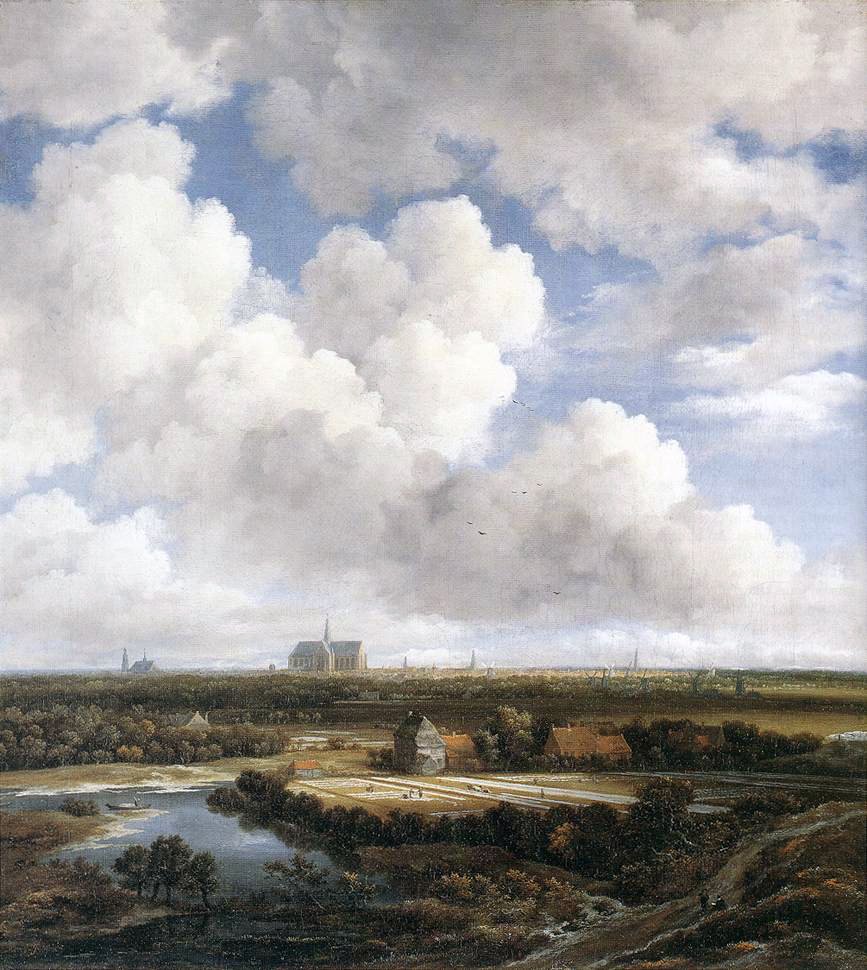
View of Haarlem with Bleaching Grounds by Jacob van Ruisdael (c 1665)
In a time when towns were few, or just began to build up open fields dominated Haarlem’s rural landscape, stretching outwards, far, wide and low until they would meet the sea or the next city over. Clouds and flocks of birds moved the sky, whilst farmers occupied the flatlands down below, for a different movement.
In the early days of Haarlem’s trade, the production of linen had shaped both the city and the land that surrounded it. Fields had been given purpose. Trees were left intentionally sparse and rows of textiles covered acres of land, being left to dry under the bright sun and winds from the west sweeping over the fields.
This oil painting by Jacob van Ruisdael, shows us this; fields that stretch far into the horizon with the Church of Saint Bavo rising into the clouds, marking the city of Haarlem off in the distance. These early heights gave a sense of direction, a natural compass of sorts, with the early horizons only telling as much as it showed.
But merchants, travellers and citizens relied on more than just familiarity in order to find their way; these heights were a guiding anchor in an otherwise once guideless landscape. In present day these heights still stand tall on the horizon, they helped shape. But why look from afar, when we can move closer.
Image source: View of Haarlem with Bleaching Grounds (c 1665) by Jacob van Ruisdael — via Web Gallery of Art.
CHAPTER 2 | THE SACRED HEIGHTS
As we leave the fields behind us to step foot in Haarlem, the once distant horizon is no longer so distant. In Haarlem, heights served many purposes beyond guiding those lost. Churches were a symbol, not just to the faithful but also the faithless, a sign of religion and political power, that manifested itself as a presence you couldn’t miss that rose far above the earliest of rooftops. But now, these heights will guide us through the city, as we begin to follow their history, stories and legacy in Chapter 2. Let’s begin by moving in closer to Haarlem’s most well known height, one that sits in the heart of the city itself: the Church of Saint Bavo.
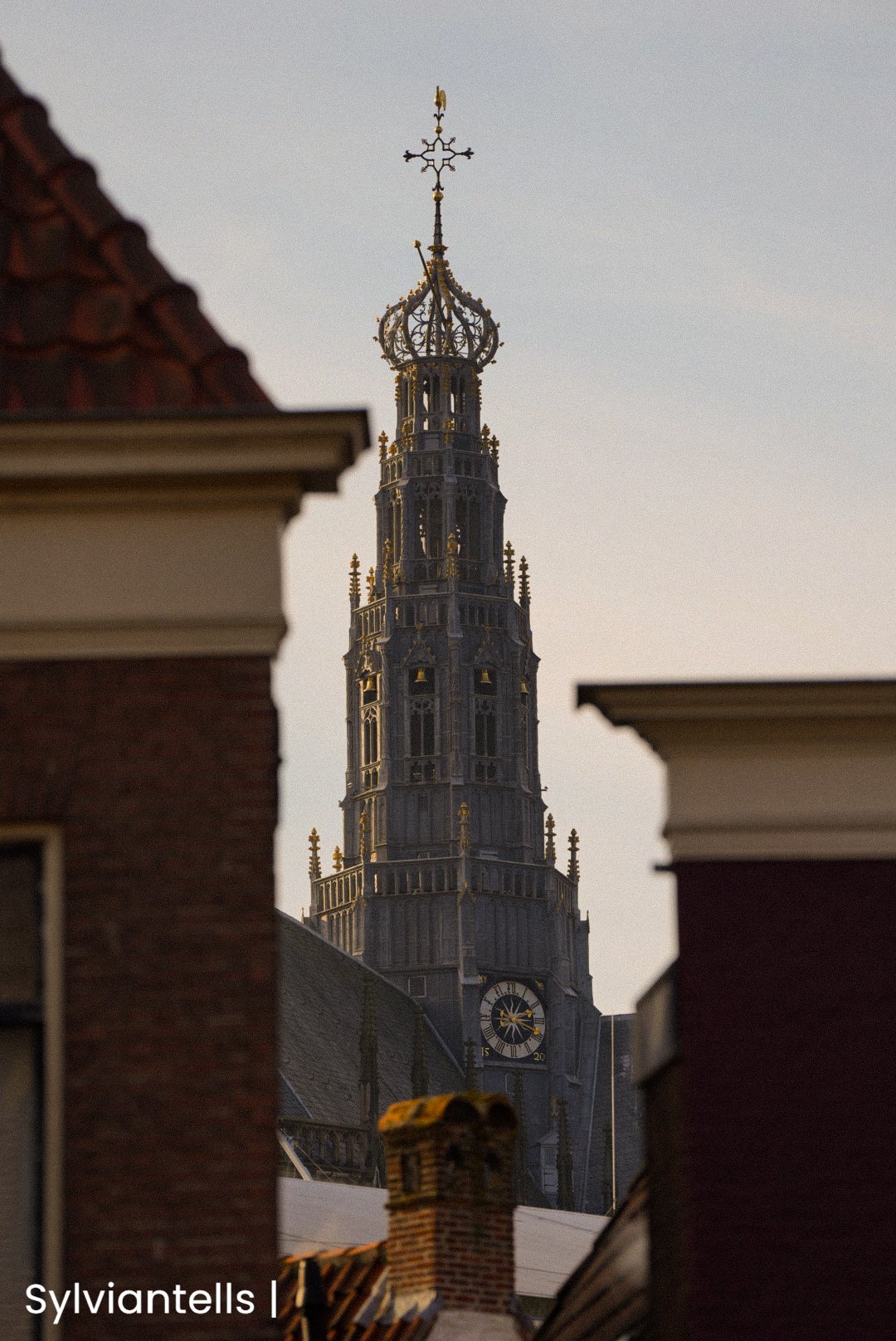
Between Brick and Sky (2026) | Sylviantells Original
The Church of Saint Bavo, the most well known height to rise on Haarlem’s skyline a landmark that’s been seen and felt over generations, but not as old as the very stone it stands on. Yet the church as we know it today, wasn’t the first to rise on this site, as two more came before it, centuries before it even. The oldest known record of a church that predates the Gothic Saint Bavo takes us back to the 9th-century, where a rustic wooden church stood in its place. Only very little is known about this original structure, with no surviving paintings and only a limited amount of information. Although, it’s believed that even this church was dedicated to the late Saint Bavo, a 7th-century nobleman who gave up his wealth for faith, a devotion that would echo through centuries even long after his passing.
As times changed, so did the city and with it the Church of Saint Bavo. It wasn’t until the 11th-century that trade really began to flow through Haarlem’s streets, markets and waterways. The city’s economy was growing and with it its political power strengthened. And as for the church? It evolved alongside it during this time, reflecting just how strong Haarlem had become.
The Church of Saint Bavo restructured, quite literally. The once humble wooden church stood no more, with records suggesting it was a conscious dismantling rather than damage from fire or conflict. In its place, a Romanesque church rose up from the wet mud-soaked cobblestones. This was more than a simple redesign; Romanesque churches were known for their solidity and imposing presence. Layers of heavy stone formed thick walls, rounded arches added structural balance and windows only pierced the stone sparingly, admitting light with restraint. This era of the Saint Bavo stood firm, it was built like a fortress, a reflection of the city’s power both in religion and politics. The architectural shift was no mere change, but it would also silently foreshadow what was still to come for this once small wood built church.
Between the 14th and 16th centuries, the Church of Saint Bavo would reshape the horizon one last time. Haarlem and its people had prospered through an expanding regional influence and a thriving trade in linen. Haarlem became wealthy, and that wealth would demand visibility not just across the city, but also far beyond it. The Romanesque church was solid, yes. But it lacked the height and status the city had quietly began to ask for during these changing times, yet it wouldn’t take long before stone began to rise. The Romanesque church did not vanish overnight, nor was it swept back into the stone from which it once rose. Instead, the church was transformed. For generations, hands moved stone upon stone, arches began to stretch upward and walls once built with restraint surrendered to stained glass, embracing the light. It didn’t stop there: the Church of Saint Bavo showed no sign of slowing its ascent, as the great tower rose up from the body of Saint Bavo, claiming the very sky that once felt just out of reach. By the early 16th century, around 1520, the Saint Bavo had become a symbol on the horizon that towered high above the rooftops, not just a symbol of the city’s civic pride, but also for the very faith that had raised it from wood to stone over centuries, forming the skyline we’ve grown to admire. But Haarlem wasn’t done with the story of Saint Bavo just yet, and neither are we.
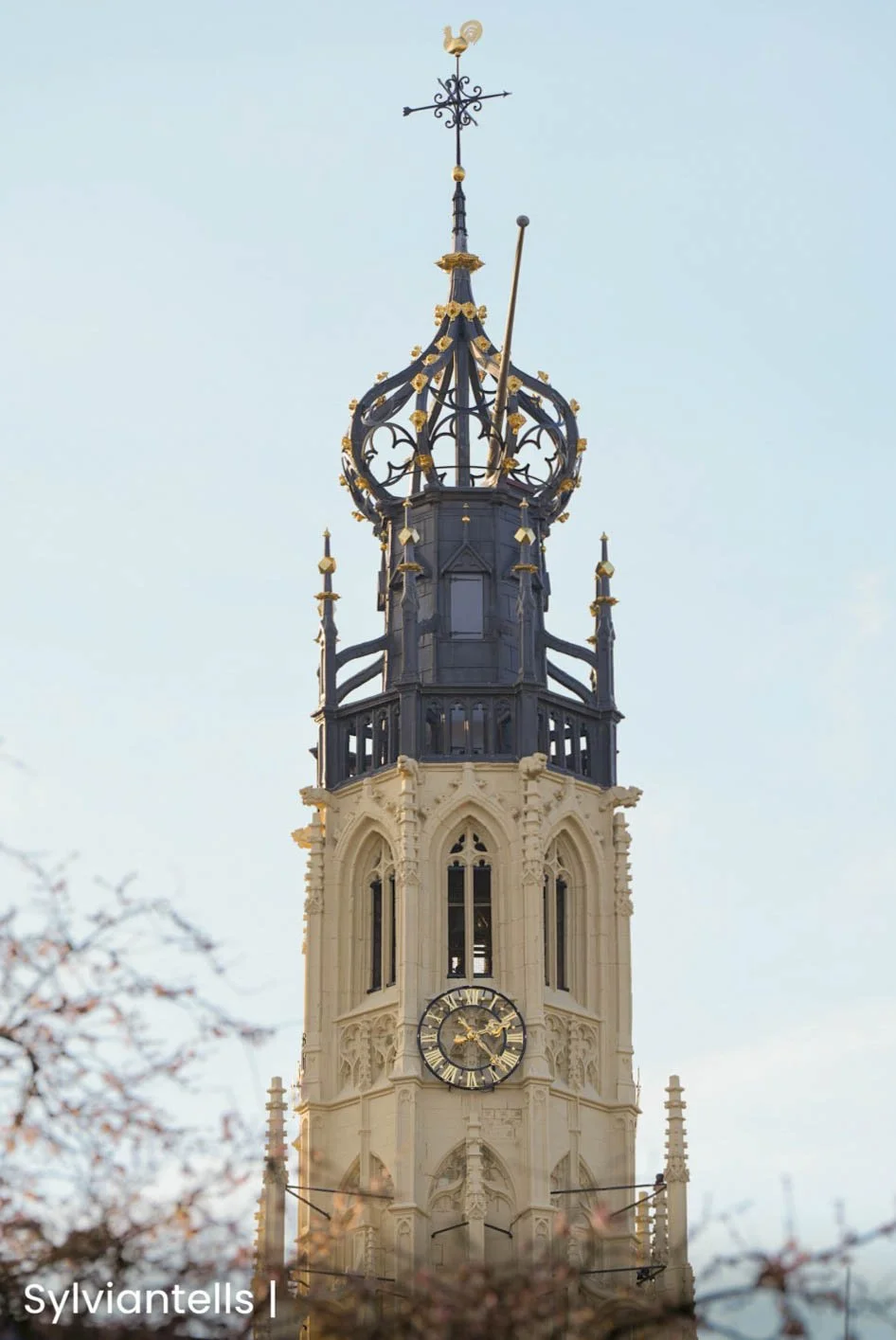
The Bleached Tower (2026) | Sylviantells Original
Before we move over to Haarlem’s second tribute to Saint Bavo, I’d like to show you something else, close to where we looked up to the Church of Saint Bavo and only a head turn away. Come with me to take a look at the second height we could see on the Atlas van Loon, at the western edge of the city — The Bakenesserkerk.
Do you notice anything, similarity perhaps? Well, it’s no coincidence that the Bakenesserkerk and the Church of Saint Bavo are so alike in appearance. They grew up together, sharing the same Gothic soul which echoes from stone, to the spire that rises into the clouds. But much like how the Church of Saint Bavo changed over time, so did the Bakenesserkerk.
The Bakenesserkerk did not begin its life as a church, nor did it originally carry the very name by which Haarlem knows it today. Its origins trace back to the 13th-century, when this site was home to a Marian chapel, known as the Onze Lieve Vrouwekapel op Bakenesse. With the name Bakenesse itself likely deriving from the Dutch word ‘‘baken’’ meaning beacon a name that would be carried into the 15th-century, when the chapel evolved into a church, a church we now know as the Bakenesserkerk.
Similar to the Church of Saint Bavo, the main tower we see today would rise in the mid-16th century. And by 1530, what had only been a beacon in name had become a beacon shaped in stone. But the stone holds a secret. It’s believed by some that the tower we see before us holds a secret. The question is: is it myth or truth.
It’s no secret that the tower we see today is oddly similar to that of the Church of Saint Bavo, even having earned the nickname ‘‘tweelingtoren’’ which directly translates to twin-tower. But was it supposed to stand here in the first place? That very question has been the topic of an ongoing debate for centuries, believe it or not.
Some believe that the tower we see today was meant for the Church of Saint Bavo, and not for the Bakenesserkerk. Haarlem was growing, and with it came change, not just to the buildings across the city, but to the very materials that were being used to shape them. The Church of Saint Bavo was no exception. The church walls, arches and decorative elements remained solid as stone, yes. With the tower being a wooden skeleton instead that would later be covered by sheets of lead layering upward. Yet conflicting reports mention another tower, an earlier one. This is where the sky gets gloomy, because what is truth and what is myth? It’s said that this earlier tower was built out of stone like the body beneath yet it was too much, putting stress on the very supports that held it up and so, a decision was made. The stone tower would be taken down, but not destroyed and according to the tale, relocated to the Bakenesserkerk, where it was given a second life. It’s hard to say if this story is true or not with historians, architects and the like debating it to this day, and honestly I’m not that sure either perhaps that’s the beauty of it, a mystery on the horizon left unsolved.
CHAPTER 3 | CHANGING HORIZONS
Names endure through the passing of time carried in different bodies and voices. Yet when old names return, there also comes a time that new names rise beside them, taking on their own bodies. So it is with horizons, they redraw and reshape some more gently than others but they all change. Somehow, someway. Throughout this story we have been witnessing this very shift. Heights falling, heights rising, changing not only in their role but also appearance. In Chapter 3 we will be looking at two more heights; an old height that returned and a height that rose after conflict. Ready to take a walk? The first height takes us out of the city. Saint Bavo’s story in Haarlem didn’t end with the completion of the Church of Saint Bavo, his name would give way to something new. The Cathedral Basilica of Saint Bavo.
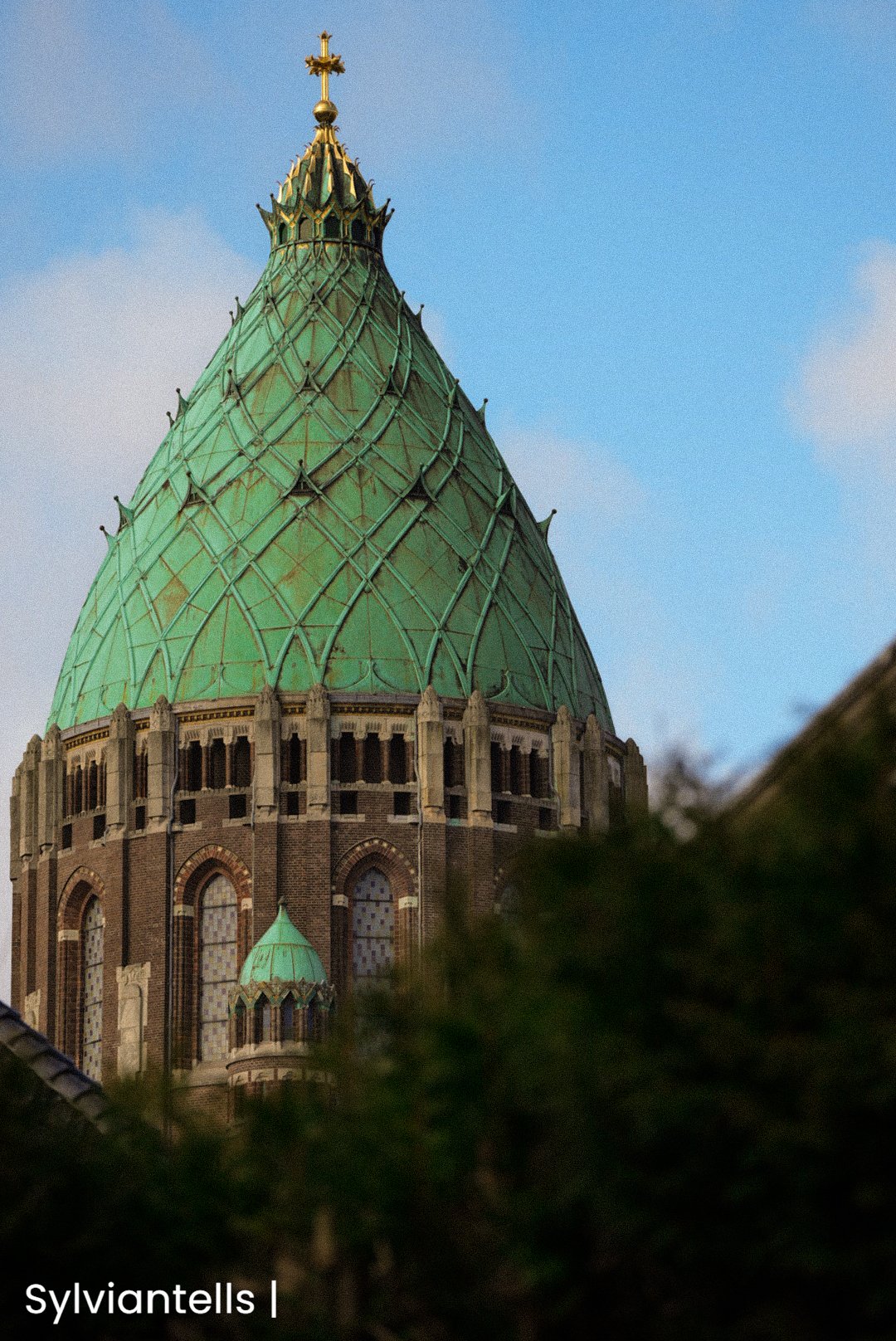
Crowned in Copper (2026) | Sylviantells Original
The Cathedral Basilica of Saint Bavo was not born from the cobbled together medieval stone, but from the Reformation of Haarlem itself. In 1566, the very grounds that held onto faith felt shakier than ever. The same faith that had held people together through change and turmoil, the faith that shaped Haarlem’s earliest horizon, now stood at a tipping point. And well, tipped it did.
The Reformation was not driven by one man alone, but by the rising voice of many who had grown increasingly disillusioned with how faith and power had become one and the same. Faith had begun to form cracks from the inside under the weight of its own ambition, not just in the Netherlands but across the entirety of Europe. For over a century restless voices would scream through cities, churches, cathedrals and courts sweeping away the very symbols of the Catholic authority leading to the destruction of countless statues, paintings, relics and altars in the process known as the Iconoclastic Fury of 1566.
While it’s easy to mistake these actions by the Protestant uprising as an act of anti-religion, yet their motivation was not to erase but to return it back to what they believed was its purest form, they were convinced that their fellow believers had lost touch with the very religion they worshipped. The Church of Saint Bavo was one of the churches that was touched by the hands of the Reformation, shaken up from within like never before. Statues of saints torn down, altars were dismantled and imagery was either hidden from sight or destroyed. And so the church was once again transformed, this time not in form but in the symbols it held close to its heart, the church had become Protestant. The shift from Catholic to Protestant was no mere change, especially to those whose faith had been shaped by the symbols and rhythms that were suddenly present no more.
It sent shockwaves through Haarlem. Faith had changed, and for some life itself. Yet the Catholic Church would not bow down to the Reformation. Smaller churches were raised in secret, hidden from the watchful eyes of the Protestants. They were no grand structures like the churches of old, nor were they meant to be seen. People passed by them, they were maybe even entered just without realising it but all blending into everyday life. These were known as Schuilkerken, literally meaning Hidden Churches in Dutch. Where were they built? In the places no one cared to look: the web-filled attics of houses, and the damp basements beneath them an unsightly church perhaps, but one that still kept believing even through turmoil. For a time, it worked. But they knew hiding would not last forever and they wouldn’t have to. What once hid in shadow came back into the light, no longer was worship confined to attics and basements. It could finally breathe again. No longer hidden, statues were restored, altars returned and paintings uncovered from years of dust. In 1853, the Catholic hierarchy was restored in the Netherlands, and with it brick and stone could rise. Haarlem was one of the cities that chose to rise again, but this time it wouldn’t be a chapel or church that would reach for the sky. Instead, Haarlem would raise a cathedral a monument that would speak not of defiance but of return.
And so, the Cathedral Basilica of Saint Bavo began to rise. Unlike the Church of Saint Bavo, the cathedral was not designed to be purely gothic, well sort of. During the late 19th-century, architects returned to a style of old. One that would renew in form but not in soul, a reflection of what came before shaped for a new century. This style is known as Neo-Gothic. A blend of medieval stone and modern 19th-century ambition. This style caught the eyes of no mere architect, but of Joseph Cuypers. Does that name sound familiar? It might. Joseph Cuypers was the son of Pierre Cuypers, the architect behind the Central Station and Rijksmuseum of Amsterdam, but perhaps that’s a story for another time. The name Cuypers was known by the very clouds and the people beneath them, the cathedral was in good hands, and for decades it rose brick by brick. Construction began in 1895, reaching the clouds by 1930 actually making it one of Haarlem’s youngest heights. Saint Bavo had been given a second body, one that would hold onto the faith it had given back.
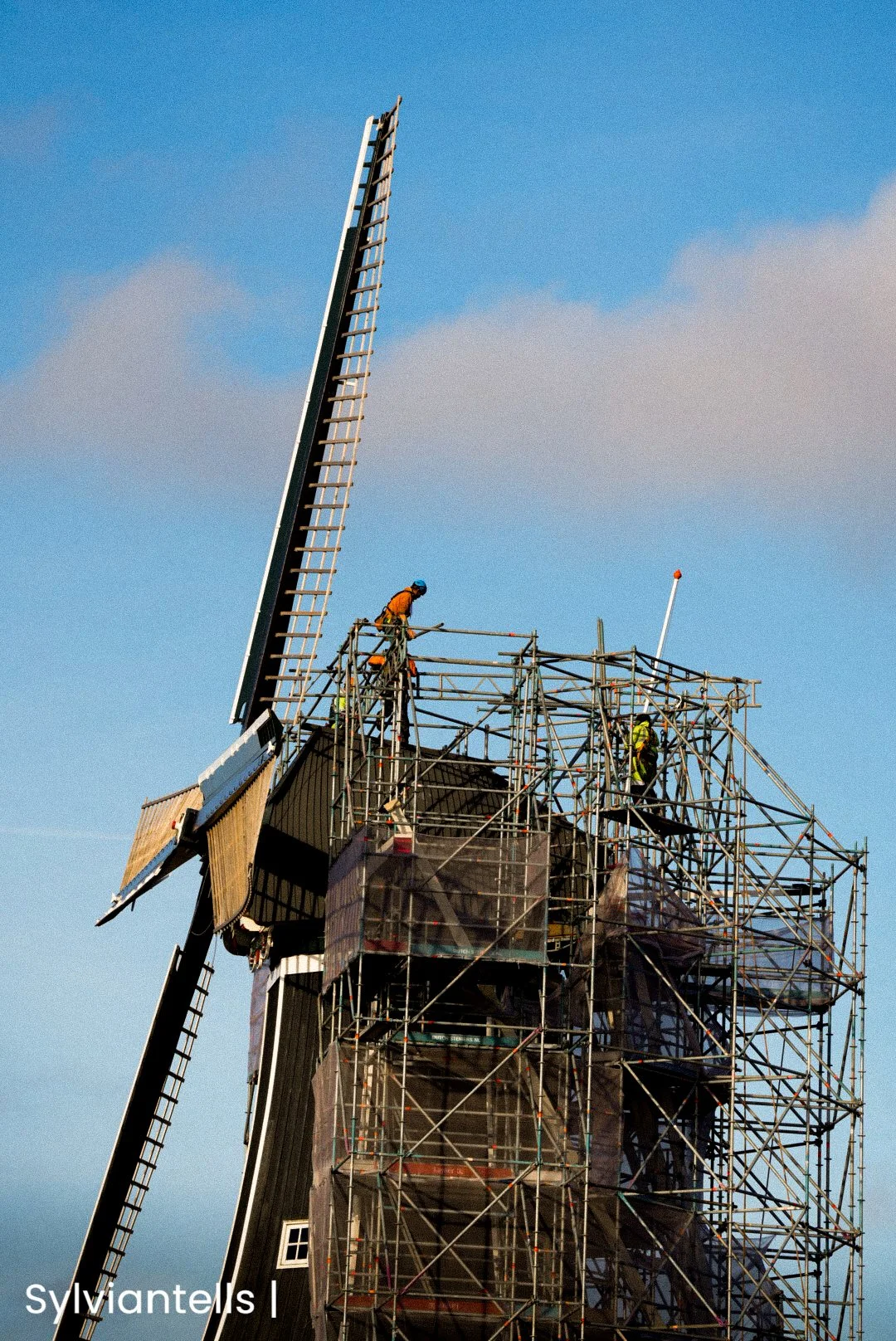
Hands of Change (2026) | Sylviantells Original
They turned day and night, through sun and storm with their hands stretching high and wide across the horizon. Now, only one still stands in Haarlem. The Adriaan a relic of Haarlem’s early industrial age.
Long before the age of steam and steel, it was nature’s wind that powered Haarlem’s economy. Looking at the Atlas van Loon, we can see that windmills had dotted much of the city’s outer edges where the stone faded into the grass of Haarlem’s rural landscape. With the windmills and the fields working together like hands on a clock, a rhythmic bond that would last for decades. Not just in Haarlem but across all of the Netherlands.
Time, it fills many roles. In Haarlem it was the quiet architect and the force that didn’t demand but nudged. Changing not only how heights look, but the roles they came to hold. The Adriaan also changed from within, an interesting turn really. While Dutch windmills are commonly known for milling grain, moving water and reclaiming the once swamp filled land. The Adriaan chose to follow its own path.
In its early days the Adriaan would choose not to turn grain, but tobacco. It was even built for it, the man behind the windmill, Adriaan de Boois was an industrialist who cared little for full bellies and more for deepening his own pockets. But much like the tobacco it once grounded goes up in smoke so did the windmill. In April of 1932, skies darkened, and the smell of burnt wood passed over the city with scraps of wood littering the very stones the mill had stood on for over a century.
What caused the fire? Well, we don’t know even decades later. Its mostly been guess work up until this point, left open for our theories and own interpretations of what happened that very evening. But if it burned down, why and how are you seeing it on your screen now?
After the destructive dance of flames had ended, citizens did what they do best they came together. Collecting money for the Adriaan to rise up from the ashes, no matter the cost. Yet it didn’t all go according to plan. Money was raised but it was not enough. The regional council denied further municipality funding, and for a while hope felt lost. Haarlem did not yet hold the keys to the Adriaan you see. It was private property. Sold from Adriaan de Boois, many years prior to the highest bidder, making it near impossible for the regional council to approve such a request as on paper it wasn’t theirs. It stayed this way for the next 30 years, until in 1963 the city of Haarlem at long last held the keys and with it a decision was made. The Adriaan would be rebuilt, no matter the cost. Decades passed, but plans were made and permissions were no longer a hurdle. In April of 1999, the windmill began to rise from the ashes. And on the 23rd of April 2002, exactly 70 years after the fire that robbed Haarlem’s inner river of its height it turned once more. Today the Adriaan still turns, not as an active mill but as a monument still standing tall almost like it never left.
Haarlem. Built on medieval stone, reaching for the sky that felt out of its reach. Growing each day and rising after every fall. All the heights we looked at played a different role in Haarlem’s history, a varied one for sure. But one that reminds us that no matter how hard things get or how times change, rising back up is possible. For Haarlem Upwards, I wanted to capture everyday angles of Haarlem’s most well known heights. Say you lived in the city, maybe you do? What do you see from your street, when you exit the door or when you raise your gaze on a walk. Beauty is everywhere, sometimes we just have to take the time to look.